Meet our Year 4 Team:
Year 4 Team
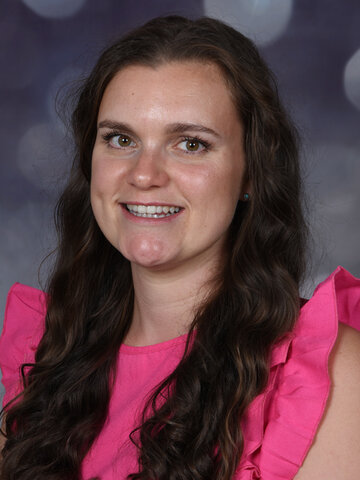
Miss Chapman
Class Teacher - 4Ch
.jpg)
Mrs Hunter
Class Teacher - 4HS
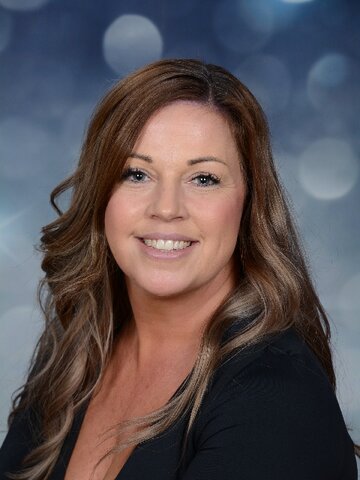
Miss Spencer
Class Teacher - 4HS
.jpg)
Mrs Oldershaw
Teaching Assistant
.jpg)
Miss Hulse
Teaching Assistant

Mr Slaney
Teaching Assistant
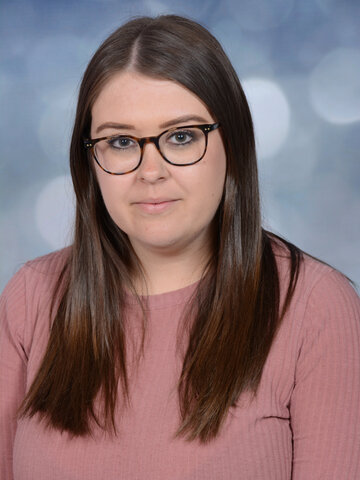
Mrs Robinson
Teaching Assistant
4Ch - Your 4C Class Teacher is Miss Chapman.
4HS - Your 4HS Class Teacher is Mrs Hunter and Miss Spencer.
Our Year 4 Teaching Assistants are: Miss Hulse, Mrs Robinson, Mr Slaney and Mrs Oldershaw. They will work across both classes.
PE - On PE days, children should wear school PE kit with jewellery removed. Earring studs that are not removed will be covered with microporous tape.
Spring 2 PE Days 4HS: Monday & Wednesday 4Ch: Wednesday & Thursday
Coats & outdoor shoes- please can you send your child in with a coat every day as we will be learning in and out of the classroom in both rain and shine. Outdoor shoes are particularly important. It is not safe for children to spend time in school without their shoes on, regardless of how wet they are. It is imperative that all belongings, including coats, are clearly named.
Water bottles - children should bring a water bottle in with them each morning so that they can access a drink during the day.
Reading - in Key Stage 2, reading continues to be something that children should be doing regularly so that they are able to build their fluency and comprehension. Please can you record in your child's reading diary each time that they read so that we can monitor their progress more accurately.
Bookbags - Please bring in books/book bags every day. These will be kept in your child's drawer or on their peg. Where possible, please avoid sending your child in with very large back packs as we struggle to fit them all in the cloakroom.
Please can all toys, including squishies, be left at home and NOT brought into school.
Autumn 1

This half term, Year 4 will be exploring Rise Up: Ordinary Kids with Extraordinary Stories by Amanda Li through the Pathways to Read programme. This inspiring text shares the real-life stories of children from around the world who have shown courage, determination and resilience in overcoming challenges and making a difference.
Throughout the unit, children will develop a range of important reading skills. They will build their reading fluency, learn to make predictions, clarify vocabulary and use retrieval skills to find and explain information from the text. Pupils will also deepen their understanding by asking thoughtful questions, making inferences about people's thoughts, feelings and motivations, and justifying their ideas with evidence from what they have read. They will explore how authors use language effectively and discuss the impact of key word choices.
As they discover the inspiring stories within the book, children will reflect on themes of perseverance, empathy, diversity, self-belief and aspiration. We hope this unit will encourage pupils to recognise their own strengths and understand that young people can make a positive impact on the world around them.

How we read in our guided reading lessons:

Autumn 1

This half term, Year 4 will be studying Counting on Catherine by Helaine Becker as part of the Pathways to Write: Black Lives Matter scheme. This inspiring picture book tells the story of Catherine Johnson, a brilliant mathematician whose calculations helped NASA send astronauts into space and return them safely home.
Through this text, children will explore themes of perseverance, equality, resilience and achievement, learning about the barriers Catherine faced as an African American woman and how she overcame them through determination and hard work. Pupils will develop their writing skills by creating biographies, reports, explanations and narrative pieces inspired by her remarkable life.
Alongside our writing lessons, we will deepen our understanding of significant individuals who have contributed to shaping our world and celebrate the achievements of Black figures throughout history. We look forward to sharing the children's fantastic writing and learning journey with you.
For the Year 4 Pathways to Write: Counting on Katherine (Counting on Catherine/Katherine Johnson) unit, the final outcome is:
To write a fact file about Katherine Johnson, including a short biography.
The children build up to this through a range of shorter writing activities, including:
- Descriptions
- Character descriptions
- Diary entries
- Dialogue
- Letters
- Biographical writing

Autumn term
This term, Year 4 will be following the Power Maths White Rose Edition scheme. Children will develop their understanding of place value with numbers up to 10,000, before moving on to addition and subtraction using formal written methods. They will then explore the concept of area and build confidence with multiplication and division facts up to 12 × 12. Throughout the term, pupils will develop their fluency, reasoning and problem-solving skills, explaining their mathematical thinking and applying their learning to a range of real-life contexts.
We will make times tables our main focus, practising hard and building our confidence using Times Table Rockstars and timestables.co.uk as we prepare for the Multiplication Tables Check (MTC), which takes place at the beginning of Summer 2 after half term. We will undertake a practice MTC approximately three times a week so that the children are used to answering 25 times table questions with 6 seconds to answer each question. Further information about the statutory MTC can be found on the government website.

Check out www.timestables.co.uk for some fantastic games to aid learning as well as TTRS and www.topmarks.co.uk. The children should be practising as often as they can at home so that they know each times table from 1 to 12 off by heart. The MTC 6 seconds per question gives children enough time to recall an answer they have learnt by heart but not enough time to use their fingers on which to count. Being able to count in a certain number is not the same as knowing that times table!
Autumn 1
Geography: Where Does Our Food Come From?
This term, Year 4 will be investigating the important question “Where Does Our Food Come From?” Through this exciting geography unit, children will explore the journeys that food takes from farms and producers to our plates, developing an understanding of the connections between people, places and the environment.
Pupils will learn about different types of farming, food production and trade, discovering how climate and physical geography influence what can be grown in different parts of the world. They will investigate where common foods originate and explore the global networks that allow us to enjoy a wide variety of foods throughout the year.
Throughout the unit, children will develop key geographical skills by:
- Using maps and atlases to locate countries and regions around the world.
- Exploring human and physical geographical features.
- Understanding how food is produced, transported and sold.
- Interpreting data and identifying patterns.
- Considering the environmental impact of food production and transport.
- Asking geographical questions and presenting their findings.
By the end of the topic, pupils will be able to explain where different foods come from, understand the processes involved in getting food from source to consumer, and recognise the importance of making informed and sustainable choices about the food we eat. This unit will encourage children to think critically about their role as global citizens and the interconnected world in which we live.
Autumn 2
 History: How Have Children’s Lives Changed?
This term, Year 4 will be exploring the fascinating question “How Have Children’s Lives Changed?” Through this enquiry-based history unit, children will investigate what life was like for children in the past and compare it with their own experiences today.
Pupils will use a range of historical sources, including photographs, documents, artefacts and personal accounts, to discover how childhood has changed over time. They will learn about the experiences of working children during the Victorian era, explore changes in education, leisure and family life, and consider how children's rights and opportunities have developed over the years.
Throughout the unit, children will develop key historical skills such as:
- Asking and answering historical questions
- Using evidence to draw conclusions
- Comparing different time periods
- Identifying similarities and differences between past and present
- Understanding chronology and how change happens over time
- Evaluating the reliability of different historical sources
By the end of the topic, pupils will have a deeper understanding of how childhood has evolved and will be able to explain why children's lives today are different from those of previous generations. This unit encourages children to think critically about the past and appreciate the opportunities and challenges faced by children throughout history.