Intent
At Shavington Primary School, our Geography curriculum is designed to nurture pupils who are curious, informed and enthusiastic about the world they live in. Using the Kapow Primary Geography scheme as a basis, we provide a carefully sequenced and knowledge‑rich curriculum that fully aligns with the National Curriculum expectations for Geography. The curriculum progressively builds understanding through our four golden threads—Locational Knowledge, Place Knowledge, Human and Physical Geography, and Geographical Skills and Fieldwork—ensuring consistency and coherence from Early Years to Year 6.
Our intent is to develop children who:
-
Build a secure understanding of where places are, both locally and globally, and how they are connected.
-
Gain deepening place knowledge, learning about diverse environments, cultures and communities.
-
Understand key human and physical processes, recognising how people interact with, shape and respond to their environments.
-
Apply accurate geographical skills, including fieldwork, mapwork, enquiry, observation, data collection and digital mapping.
-
Develop environmental awareness and a sense of responsibility for caring for the world, echoing ideas on the importance of geographical thinking found in educational guidance.
Drawing on the school’s ethos of exploration and curiosity, as reflected in current geography communications, our curriculum encourages children to explore their immediate environment and broaden their understanding of the wider world.
Implementation
Geography at Shavington is taught through a well‑structured, sequential framework provided by Kapow Primary, ensuring clear progression and skilful revisiting of knowledge and concepts year on year. This structure supports children in building cumulative knowledge, moving from concrete local experiences to more abstract and global understanding.
Key elements of implementation include:
1. Sequenced and Progressive Learning
-
Each Kapow unit is mapped onto our curriculum progression documents to ensure that Locational Knowledge, Place Knowledge, Human & Physical Geography, and Geographical Skills and Fieldwork are built upon systematically.
-
Vocabulary and concepts are revisited at increasing levels of complexity.
2. A Blended Pedagogical Approach
-
Teachers adapt Kapow lessons to our school context, ensuring teaching reflects the engaging, enquiry‑driven approach valued by Shavington Primary School.
-
Lessons include a mix of research, discussion, mapping, model‑making, observation, problem‑solving and practical geographical investigations.
3. High‑Quality Fieldwork
-
Field studies begin in the Early Years with exploration of the school grounds and surrounding locality.
-
As pupils progress, they undertake more complex fieldwork, including data collection, surveys, route mapping and use of digital tools such as aerial imagery and GIS-style interfaces.
4. Cross-Curricular Connections
-
Geography learning is enhanced through links with English (e.g., high‑quality texts that support geographical understanding), science (e.g., climate and habitats), and computing (e.g., presenting geographical data).
-
Teachers draw on children’s lived experiences and continue to use Shavington’s existing emphasis on exploring local, national and international contexts.
5. Inclusivity and Challenge
-
All pupils have access to well‑scaffolded lessons, with opportunities for greater depth embedded within each sequence.
-
Kapow’s resources support adaptive teaching, ensuring every learner can succeed.
Impact
Our Geography curriculum enables pupils to leave Shavington Primary School with a secure, well‑developed understanding of the world and their place within it. Through the careful progression of the scheme and the consistent emphasis on the four golden threads, pupils will:
-
Demonstrate secure geographical knowledge and use subject‑specific vocabulary fluently.
-
Show confidence in applying a wide range of geographical skills, including fieldwork, map reading, interpretation of data and geographical enquiry.
-
Be able to explain how human and physical processes interact to shape environments and influence people’s lives.
-
Show curiosity, critical thinking and a sense of responsibility for their environment, echoing the aims of the school’s current geography ethos.
-
Be well‑prepared for the next stage of their education, with the ability to discuss their learning clearly and confidently.
We measure impact through:
-
Ongoing formative assessment within each unit
-
Pupil voice and book studies
-
Fieldwork outcomes and practical work
-
End‑of-unit quizzes and reflection tasks
Overall, pupils leave Shavington Primary School as empowered, aware young geographers who understand the world, appreciate diversity and are equipped to contribute positively to their communities.
Geography in the Classroom
Here at Shavington, we like to enrich the children's learning and understanding of geographical concepts by using a variety of sources, such as technology, maps and atlases.


Geography Outside the Classroom!
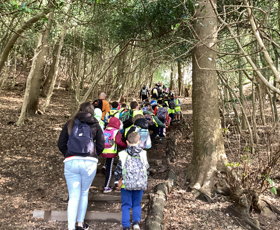
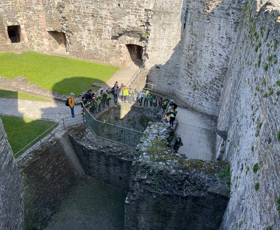
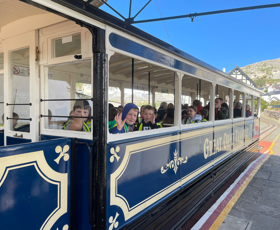
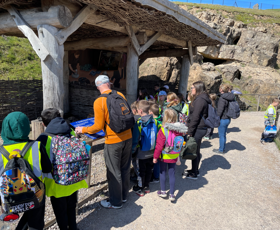
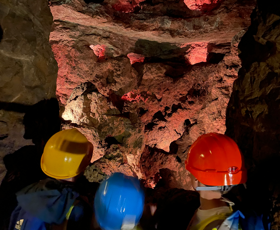
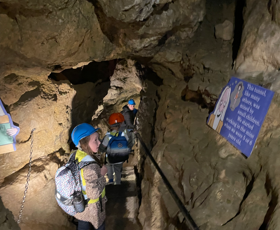
Here at Shavington we like to provide opportunities for learning outside the classroom via trips and residentials. Please enjoy some photos.
Key Documents
Below are key documents linked to the Geography Curriculum at Shavington for the current academic year (2023/2024).
Online Resources
The following links are great resources for your child to access for free to support their learning in Geography.
https://www.dkfindout.com/uk/earth/